
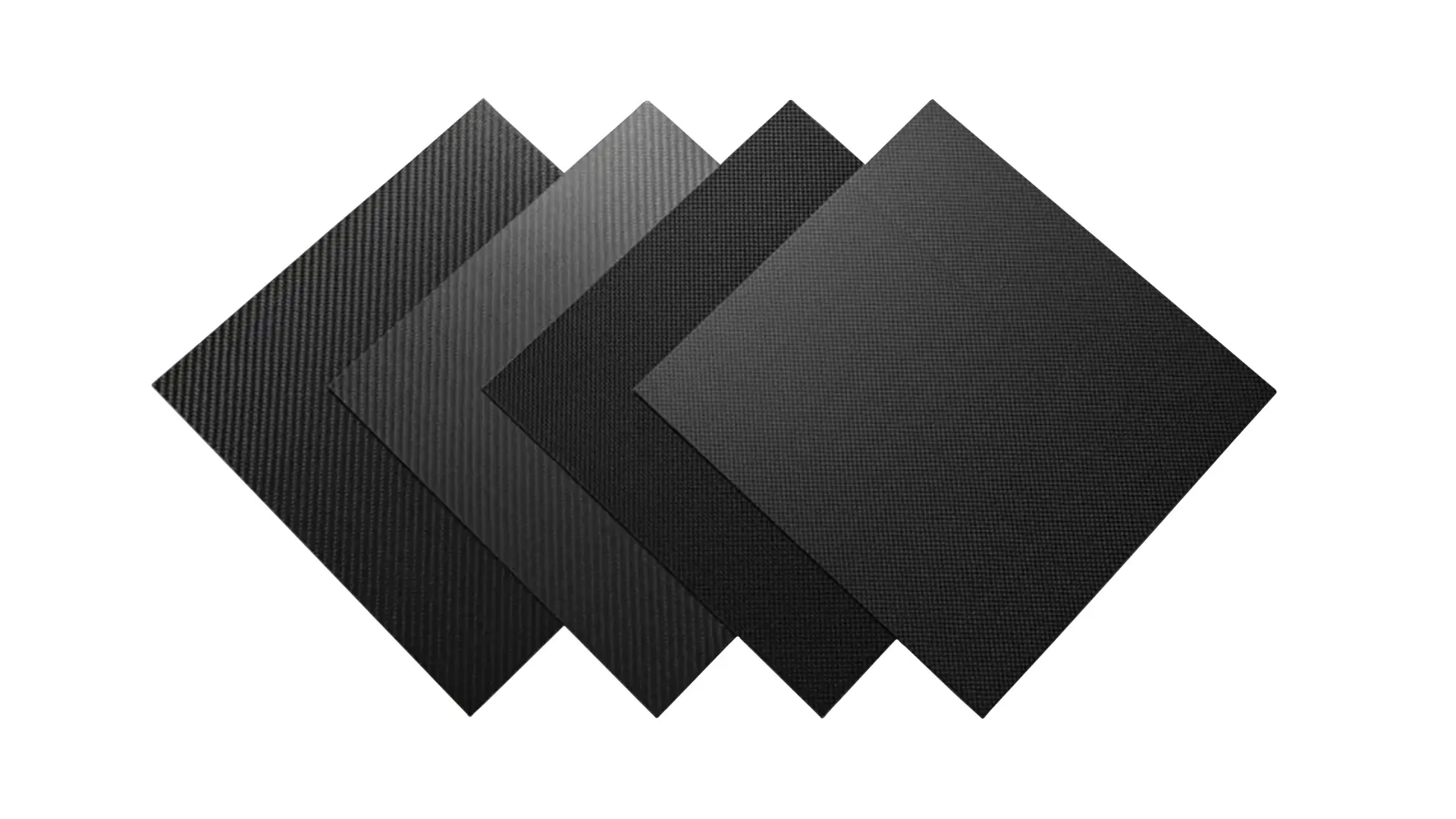
This article explains in detail how carbon fiber sheets are made, from raw fiber to finished carbon fiber plate or carbon fiber panels. The goal is not only to describe the process, but also to help customers understand how each customization option influences strength, weight, appearance, and long-term performance. By understanding the manufacturing logic, customers can make better decisions when specifying custom carbon fiber sheets.
Understanding carbon fiber sheets, carbon fiber plate, and carbon fiber panels
Carbon fiber sheets are flat composite laminates made by combining carbon fiber reinforcement with resin under controlled pressure and temperature. In practical use, the terms carbon fiber sheets, carbon fiber plate, and carbon fiber panels are often used interchangeably, but manufacturers usually distinguish them based on thickness, size, and application focus.
| Product name | Typical thickness range | Common applications |
|---|---|---|
| carbon fiber sheets | 0.3 mm to 2.0 mm | covers, skins, cosmetic components |
| carbon fiber plate | 2.0 mm to 10 mm or more | load-bearing parts, fixtures, tooling |
| carbon fiber panels | customized sizes and thickness | enclosures, architectural panels, vehicle panels |
From a manufacturing perspective, the same core processes apply to all three. The differences lie in material selection, layup design, curing method, and post-processing requirements.
Raw materials used to make carbon fiber sheets
The first step in understanding how carbon fiber sheet is made is learning about the raw materials. Carbon fiber sheets manufacturing begins with carbon fiber reinforcement and resin systems.
Carbon fiber itself is produced from precursor materials such as PAN or pitch, but sheet manufacturers focus on selecting finished carbon fiber forms rather than producing fibers from scratch.
Carbon fiber fabric types for sheets and panels
Carbon fiber sheets can be made using different forms of carbon fiber fabric. Each option affects cost, performance, and processing complexity.
Dry carbon fiber fabric
Dry carbon fiber fabric contains no resin. During manufacturing, resin must be introduced through wet layup or infusion. This method allows flexibility in resin choice but requires more process control.
Prepreg carbon fiber fabric
Prepreg carbon fiber fabric is pre-impregnated with a controlled amount of resin. For many carbon fiber sheets and carbon fiber plate applications, prepreg offers better consistency, higher fiber volume fraction, and superior surface quality.
From a manufacturer’s perspective, prepreg carbon fiber is often recommended for customers who require reliable mechanical properties and tight thickness tolerances.
Resin systems used in carbon fiber sheets
The resin system plays a critical role in determining mechanical performance, temperature resistance, and durability.
Common resin types include:
| Resin type | Key characteristics | Typical uses |
|---|---|---|
| epoxy | high strength, low shrinkage | structural carbon fiber plate |
| vinyl ester | good chemical resistance | industrial carbon fiber panels |
| polyester | lower cost, moderate performance | cosmetic carbon fiber sheets |
Epoxy resin is the most common choice for high-quality carbon fiber sheets because it provides excellent bonding and long-term stability.
Weave patterns and fiber orientation in carbon fiber sheets
Carbon fiber weave selection directly influences both appearance and performance. Customers often choose weave patterns based on visual preference, but manufacturers evaluate weave choice from a structural standpoint.
Plain weave carbon fiber sheets
Plain weave fabric interlaces fibers in a simple over-under pattern. It provides excellent dimensional stability and is widely used in thin carbon fiber sheets and decorative carbon fiber panels.
Twill weave carbon fiber plate
Twill weave offers improved drapability and a distinctive diagonal pattern. It is commonly used for carbon fiber plate and visible carbon fiber panels where appearance matters.
Unidirectional carbon fiber plate
Unidirectional carbon fiber places fibers in a single direction. This allows engineers to maximize strength and stiffness along specific load paths. Structural carbon fiber plate often includes unidirectional layers combined with woven layers for balance.
Layup design in carbon fiber sheet manufacturing
Layup design is one of the most important factors in how carbon fiber sheet is made. Layup refers to how individual layers of carbon fiber are stacked and oriented before curing.
Layer stacking principles
To prevent warping and uneven stress distribution, manufacturers design balanced and symmetric layups.
Common orientation angles include 0°, 90°, +45°, and -45°. Combining these angles creates quasi-isotropic behavior, meaning the carbon fiber sheets perform consistently in multiple directions.
| Application type | Typical layup strategy |
|---|---|
| cosmetic carbon fiber sheets | symmetric 0°/90° |
| general carbon fiber panels | quasi-isotropic |
| structural carbon fiber plate | load-oriented with UD layers |
Thickness control for carbon fiber sheets
Thickness is controlled by the number of layers and fabric weight rather than by adding excess resin.
| Number of layers | Approximate thickness |
|---|---|
| 2 layers | 0.4 to 0.5 mm |
| 4 layers | 0.8 to 1.0 mm |
| 8 layers | 1.6 to 2.0 mm |
| 12 layers | 2.5 to 3.0 mm |
Precise thickness control is especially important for carbon fiber plate used in mechanical assemblies.
Molding methods used to make carbon fiber sheets
The molding and curing process defines the final quality of carbon fiber sheets. Different manufacturing methods are chosen based on performance requirements and production volume.
Vacuum bagging carbon fiber sheets
Vacuum bagging involves sealing the layup in a vacuum bag and removing air before curing. This process improves fiber consolidation and reduces voids.
Vacuum bagging is commonly used for medium-performance carbon fiber panels and custom carbon fiber sheets.
Autoclave curing carbon fiber plate
Autoclave curing uses elevated temperature and external pressure to consolidate the laminate. This process produces the highest-quality carbon fiber sheets with excellent mechanical consistency.
Autoclave-cured carbon fiber plate is often used in aerospace, motorsport, and high-end industrial applications.
Compression molding for carbon fiber panels
Compression molding uses matched molds and pressure to shape carbon fiber panels with consistent thickness. It is suitable for repeatable production and large flat parts.
| Manufacturing method | Quality level | Cost level |
|---|---|---|
| hand layup | basic | low |
| vacuum bagging | medium-high | medium |
| autoclave | highest | high |
| compression molding | consistent | medium |
The curing process of carbon fiber sheets
Curing transforms liquid resin into a solid matrix that bonds the carbon fibers together. Proper curing is essential for achieving designed strength and durability.
Typical curing stages
- controlled temperature ramp-up
- resin flow and fiber wetting
- gelation phase
- full polymerization
- controlled cooling
Each resin system has specific time and temperature requirements. Deviating from these parameters can cause defects such as voids, delamination, or reduced strength.
Post-processing carbon fiber sheets and carbon fiber plate
After curing, carbon fiber sheets are not yet ready for use. Post-processing ensures dimensional accuracy, surface quality, and compatibility with customer assemblies.
Cutting and machining carbon fiber panels
Carbon fiber sheets are cut using CNC machining, waterjet cutting, or diamond-coated tools. Proper cutting methods prevent fiber pull-out and edge delamination.
Carbon fiber plate often requires tight dimensional tolerances, making CNC machining the preferred option.
Surface finishing options
Surface finish affects both appearance and durability.
| Finish type | Characteristics | Common use |
|---|---|---|
| glossy clear coat | smooth, reflective | visible carbon fiber panels |
| matte finish | reduced glare | industrial carbon fiber sheets |
| textured finish | functional grip | structural carbon fiber plate |
Some carbon fiber panels also receive UV-resistant coatings for outdoor use.
Quality inspection of carbon fiber sheets
Quality control is a critical part of how carbon fiber sheet is made. Professional manufacturers inspect carbon fiber sheets at multiple stages.
Inspection typically includes:
| Inspection item | Purpose |
|---|---|
| thickness measurement | ensure tolerance |
| visual inspection | detect surface defects |
| fiber alignment check | verify layup accuracy |
| mechanical testing | confirm performance |
Consistent inspection ensures carbon fiber sheets meet design requirements before delivery.
How manufacturing choices affect carbon fiber sheet performance
Customers often compare carbon fiber sheets based only on price, but performance differences are directly linked to manufacturing decisions.
Strength and stiffness
Fiber orientation and layup design determine load-bearing capacity. Structural carbon fiber plate requires different layup strategies than cosmetic carbon fiber sheets.
Weight optimization
High fiber volume fraction reduces weight without sacrificing strength. Autoclave-cured carbon fiber sheets typically achieve the best strength-to-weight ratio.
Cost considerations
The cost of carbon fiber sheets is influenced by:
- fiber type and fabric weight
- resin system
- curing method
- thickness and size
- surface finish
- machining complexity
Understanding these factors helps customers balance performance and budget.
Carbon fiber sheets compared with traditional materials
Many customers transition to carbon fiber plate or carbon fiber panels from metal or plastic alternatives.
| Material | Weight | Strength | Corrosion resistance |
|---|---|---|---|
| steel | high | high | low |
| aluminum | medium | medium | medium |
| plastic | low | low | high |
| carbon fiber sheets | very low | very high | very high |
This comparison explains why carbon fiber sheets are increasingly used in demanding applications.
Customization options for carbon fiber sheets
One advantage of working with a carbon fiber manufacturer is the ability to customize.
Customization options include:
- thickness and size
- weave pattern
- fiber orientation
- resin system
- surface finish
- machining features
Manufacturers adjust these parameters based on the intended use of the carbon fiber panels.
How Alizn manufactures carbon fiber sheets
As a professional carbon fiber manufacturer, Alizn approaches carbon fiber sheets manufacturing with a customer-focused mindset.
Our process emphasizes:
- application-driven material selection
- optimized layup design
- controlled curing environments
- consistent quality inspection
- flexible customization for different industries
We do not treat carbon fiber sheets, carbon fiber plate, and carbon fiber panels as generic products. Each project is optimized based on functional requirements.
Choosing the right carbon fiber sheet for your application
When specifying carbon fiber sheets, customers should consider:
- mechanical load requirements
- operating temperature and environment
- cosmetic expectations
- dimensional tolerance
- production volume
- budget limitations
Clear communication with the manufacturer helps avoid over-engineering or under-performance.
Common misconceptions about how carbon fiber sheet is made
Some customers assume all carbon fiber sheets are the same. In reality, manufacturing quality varies significantly.
Common misconceptions include:
- thicker carbon fiber plate is always stronger
- visual appearance equals structural quality
- all carbon fiber panels use the same resin
- hand layup and autoclave produce similar results
Understanding the manufacturing process helps customers avoid these assumptions.
Future trends in carbon fiber sheet manufacturing
Advancements in automation, resin chemistry, and process control continue to improve carbon fiber sheets manufacturing.
Trends include:
- faster curing cycles
- lower-cost prepreg systems
- improved recycling methods
- larger-format carbon fiber panels
These developments will expand the use of carbon fiber sheets across more industries.
FAQ about how is carbon fiber sheet made
Carbon fiber sheets are usually thinner and focused on weight and appearance, while carbon fiber plate is thicker and designed for structural strength.
Yes, carbon fiber panels use the same core manufacturing process, but size control, flatness, and finishing requirements are different.
Prepreg generally provides more consistent quality and strength, but dry fabric can be suitable for cost-sensitive carbon fiber panels.
Layup design controls fiber orientation, which directly determines load-bearing capacity and stiffness of carbon fiber plate.
Yes, carbon fiber sheets, carbon fiber plate, and carbon fiber panels can be customized in thickness, weave, resin, and finish.
Final Thoughts
As composite material experts, we are willing to provide you with critical assistance. The correct judgment now avoids cost overruns, delays, and disappointing results later.
Need advice on your custom carbon fiber part? Reach out to our team for expert guidance.


