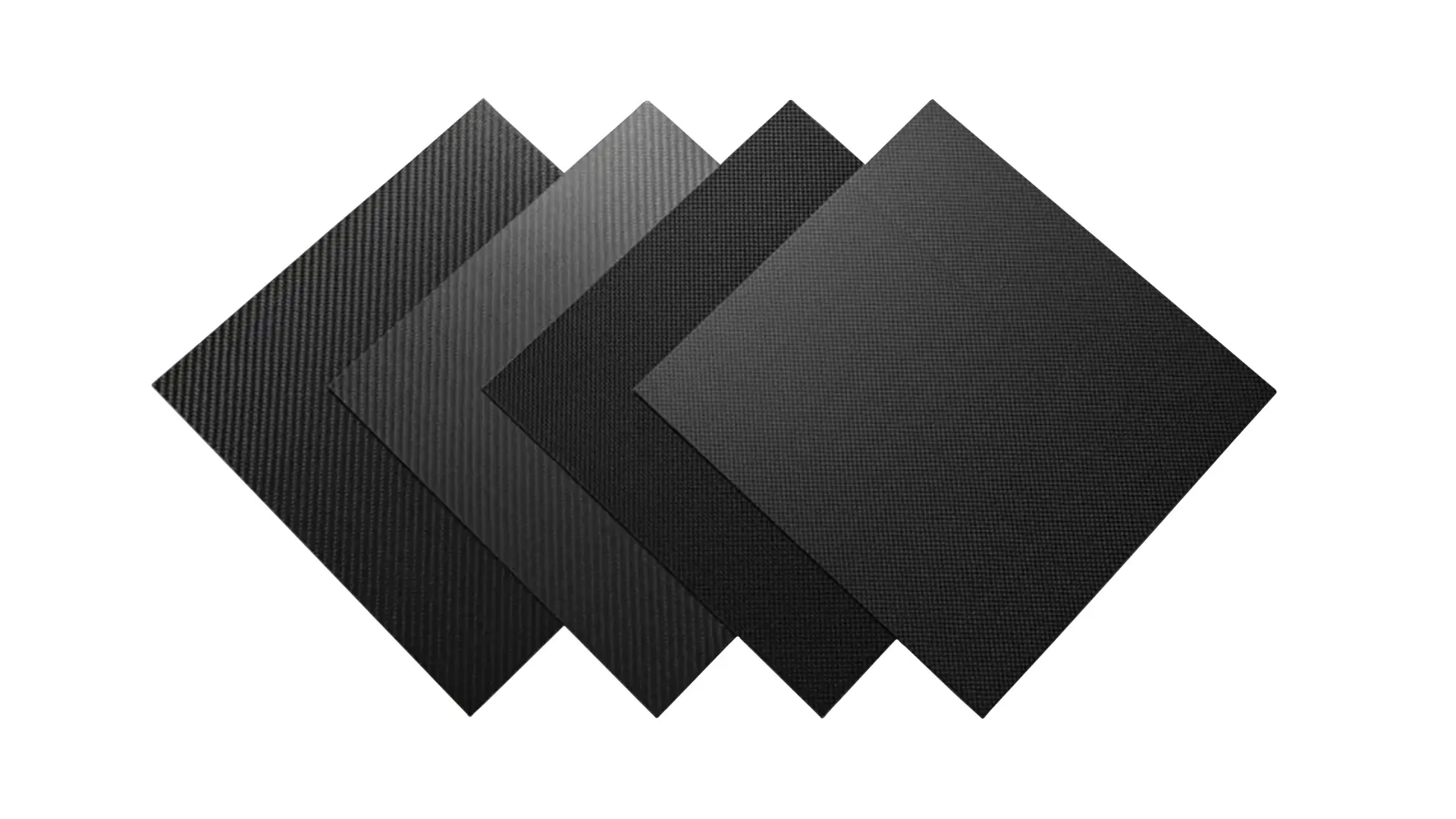
At Alizn, as a carbon fiber parts manufacturer, we produce a wide range of carbon fiber tubes for industrial, automotive, aerospace, and sporting applications. From our position in the production field, we have witnessed how this material outperforms traditional metals in many aspects. This article will explain the key differences between carbon fiber tubes and conventional materials, highlight their manufacturing considerations, and guide clients in selecting the right material for their specific project.
Understanding What a Carbon Fiber Tube Is
A carbon fiber tube is a composite structure made from strands of carbon filaments combined with a resin matrix. The goal is to create a product that is light in weight yet extremely strong and rigid.
Depending on the required performance, a carbon fiber tube can be produced through different processes such as roll wrapping, pultrusion, or filament winding. Each process affects the structural characteristics of the tube. Unlike metals, which are isotropic, carbon fiber is anisotropic, meaning its strength depends on the direction of the fiber layers.
This unique structure allows the carbon fiber tube to be engineered for precise performance requirements, which is not possible with most traditional materials.
Common Traditional Materials Compared with Carbon Fiber Tube
When evaluating the performance of a carbon fiber tube, it is essential to compare it with the most common alternatives used in tube manufacturing: steel, aluminum, and titanium. Each of these traditional materials has its own advantages in strength, availability, and cost, but they also come with physical and chemical limitations that carbon fiber can effectively overcome in many engineering and production applications.
The following comparison provides a broader overview by considering multiple dimensions including density, strength, stiffness, fatigue performance, corrosion resistance, thermal properties, and manufacturing flexibility.
| Material | Density (g/cm³) | Relative Strength | Stiffness-to-Weight Ratio | Corrosion Resistance | Fatigue Resistance | Thermal Conductivity | Manufacturing Flexibility |
|---|---|---|---|---|---|---|---|
| Carbon Fiber Tube | 1.6 | High (Directional) | Very High | Excellent | Excellent | Low | Customizable (Layup design, fiber direction) |
| Steel Tube | 7.8 | Very High | Moderate | Low | Good | High | Limited (Cutting, welding, forming) |
| Aluminum Tube | 2.7 | Medium | Moderate | Good | Fair | High | Moderate (Extrusion, bending) |
| Titanium Tube | 4.5 | High | Good | Excellent | Very Good | Moderate | Difficult (Machining, forming) |
This extended comparison clearly demonstrates that a carbon fiber tube provides a unique performance balance unmatched by traditional metals.

Weight Reduction and Structural Performance
The most immediate and noticeable advantage of using a carbon fiber tube is its exceptional weight reduction compared to traditional materials. In engineering applications such as aerospace components, automotive frames, sports equipment, and industrial robotics, every gram saved contributes directly to better performance, improved energy efficiency, and reduced operational cost. Weight reduction is not only about making parts lighter — it is about improving the overall dynamic behavior of the system. A lighter structure responds faster, accelerates more efficiently, and experiences less fatigue stress over time.
A carbon fiber tube can be up to 75% lighter than a steel tube and approximately 40% lighter than an aluminum tube with equivalent strength. This unique balance between lightness and rigidity allows engineers to achieve superior structural efficiency. For example, in automotive applications, replacing steel structural tubes with carbon fiber alternatives can dramatically lower the vehicle’s overall mass, leading to enhanced handling, reduced fuel consumption, and faster acceleration. In aerospace engineering, the same principle translates to improved fuel economy, longer flight ranges, and increased payload capacity. In robotic arms or automation equipment, lighter carbon fiber tubes enable faster motion and higher precision while minimizing the load on motors and actuators.
Traditional metallic materials such as steel and titanium offer great mechanical strength but come with substantial weight penalties. Aluminum is lighter but lacks the necessary stiffness to resist bending and deformation under heavy loads. By contrast, a properly engineered carbon fiber tube can provide steel-like stiffness while maintaining a weight that is only a fraction of the metal’s mass. This stiffness is achieved through controlled fiber orientation and composite layering during manufacturing, allowing engineers to tune the mechanical response of the material to meet specific structural needs.
The following table presents a comparative overview of weight and structural performance across commonly used materials:
| Material | Density (g/cm³) | Tensile Strength (MPa) | Specific Strength (MPa/g·cm³) | Stiffness-to-Weight Ratio | Weight Reduction vs. Steel | Fatigue Resistance |
|---|---|---|---|---|---|---|
| Carbon Fiber Tube | 1.6 | 600–3500 (depending on fiber grade) | Very High | Excellent – customizable | Up to 75% lighter | Excellent |
| Steel Tube | 7.8 | 400–2000 | Moderate | High but heavy | Baseline | Good |
| Aluminum Tube | 2.7 | 200–600 | Medium | Moderate | Up to 40% lighter | Fair |
| Titanium Tube | 4.5 | 900–1200 | High | Good | Up to 50% lighter | Excellent |
From this comparison, it becomes evident that the carbon fiber tube offers the highest specific strength and stiffness-to-weight ratio among all listed materials. Its anisotropic nature — meaning strength is distributed based on fiber direction — allows engineers to design structures that deliver maximum performance with minimal mass. This property cannot be achieved with isotropic metals like steel or aluminum, which have uniform mechanical properties in all directions and therefore require additional material thickness to achieve similar performance.
Furthermore, weight reduction in structural components contributes to longer service life. Lighter components reduce overall system loads, minimizing fatigue stresses on joints and connections. Over time, this leads to fewer maintenance cycles and improved operational reliability. For high-performance or precision applications, such as racing vehicles, aerospace assemblies, or high-speed automation, the switch from metal tubing to carbon fiber tubes represents a critical leap toward efficiency, durability, and innovation.
In summary, the carbon fiber tube achieves a balance that traditional materials cannot: extremely low weight combined with tailored stiffness and superior fatigue resistance. This advantage makes it one of the most strategically valuable materials in modern lightweight engineering.

Corrosion Resistance and Environmental Durability
Unlike metals, a carbon fiber tube does not rust or corrode. This is one of its most valuable advantages, especially in demanding or outdoor environments. Steel requires regular coatings, galvanization, or paint layers to prevent rusting. Even with these protections, long-term exposure to moisture, salt, or chemicals eventually leads to surface degradation. Aluminum, though known for forming a protective oxide layer, can still suffer from pitting corrosion and structural weakening when exposed to saltwater or industrial pollutants. Titanium performs better in such conditions but comes with a significantly higher production and machining cost.
For outdoor installations, marine applications, or industrial equipment operating in chemical environments, a carbon fiber tube provides inherent resistance to corrosion. The epoxy resin matrix surrounding the carbon fibers forms a complete barrier against moisture and contaminants. When a UV-resistant coating is applied during manufacturing, the surface remains stable even after prolonged sunlight exposure. This makes carbon fiber tubes ideal for long-term installations in coastal structures, aerospace components, sports equipment, and transport systems where metal degradation would otherwise be a major concern.
From the manufacturing standpoint, corrosion resistance also influences maintenance cycles and total life cost. Traditional materials often require continuous inspection, repainting, or replacement due to oxidation or electrochemical reactions. A carbon fiber tube, however, maintains its surface integrity and performance for years with minimal upkeep. This translates directly to lower maintenance costs, fewer replacements, and improved reliability in large-scale applications.
The following table compares the corrosion resistance and environmental durability of carbon fiber tubes with steel, aluminum, and titanium under different conditions.
| Material | Saltwater Resistance | Chemical Resistance | UV Stability | Maintenance Requirement | Service Life Expectancy |
|---|---|---|---|---|---|
| Carbon Fiber Tube | Excellent – unaffected by salt, no rusting | Excellent – inert to most solvents and acids | High – when coated with UV-stable resin | Very Low – occasional surface cleaning | 15–25 years (depending on environment) |
| Steel Tube | Poor – rapid corrosion without coating | Moderate – reacts with acids and moisture | Moderate – paint degrades under UV | High – frequent repainting or coating | 5–10 years |
| Aluminum Tube | Good – natural oxide layer but prone to pitting | Moderate – reacts with alkaline chemicals | Good – stable under UV exposure | Medium – periodic inspection | 10–15 years |
| Titanium Tube | Excellent – forms stable oxide film | Excellent – resistant to most chemicals | Excellent – unaffected by UV | Low – minimal cleaning required | 20+ years |
This comparison clearly shows that carbon fiber tubes rank close to titanium in terms of corrosion and environmental resistance, but at a much lower production cost and greater design flexibility. Unlike aluminum or steel, a carbon fiber tube’s performance is not dependent on coatings or anodizing processes. Its composite structure itself provides the barrier protection needed for long-term durability.
Additionally, the absence of electrochemical reactions in carbon fiber composites eliminates galvanic corrosion issues that often arise when dissimilar metals are used together. For instance, when steel and aluminum components are connected in the presence of moisture, galvanic corrosion can occur, accelerating material decay. In contrast, a carbon fiber tube combined with stainless fasteners or polymer fittings remains chemically stable and dimensionally consistent over time.
Another critical factor is UV exposure. While most resins can degrade under long sunlight exposure, modern epoxy systems used in carbon fiber tube production are enhanced with UV inhibitors. These resins maintain color stability, surface hardness, and bonding strength even in tropical or desert climates. For extreme outdoor environments, additional clear coatings can be applied during curing, further increasing the longevity of the tube without altering its weight or mechanical performance.
From a maintenance and operational perspective, this environmental resilience significantly reduces long-term costs. In applications such as drone arms, offshore equipment, marine masts, or industrial piping, where frequent exposure to moisture and salt air is inevitable, the long service life of carbon fiber tubes ensures that the total lifecycle value far surpasses that of metals.
In summary, when comparing corrosion resistance and environmental durability, carbon fiber tubes offer the following long-term advantages over traditional materials:
- No rusting or oxidation in marine or humid conditions.
- Chemical resistance to acids, alkalis, and solvents.
- Dimensional stability and UV protection when properly coated.
- Lower maintenance frequency and cost.
- Longer operational lifespan with consistent structural integrity.
By combining all these attributes, carbon fiber tubes deliver a performance profile that not only improves reliability but also supports sustainable engineering practices by reducing material waste and maintenance-related emissions. For industries that operate in harsh or unpredictable environments, transitioning from metal to composite tubing represents a strategic step toward achieving both performance and longevity goals.
Thermal Stability and Dimensional Accuracy
Temperature variation is one of the most critical factors influencing the performance of structural and precision components. Metals naturally expand when heated and contract when cooled, a property that can cause alignment shifts, dimensional inaccuracies, and internal stresses in complex systems. In high-precision assemblies such as satellite structures, optical frames, robotic systems, and industrial measuring instruments, even a small thermal expansion can lead to significant performance errors or mechanical failure.
A carbon fiber tube, however, demonstrates outstanding thermal stability and dimensional accuracy. Unlike metals, its coefficient of thermal expansion (CTE) is extremely low — in some cases even approaching zero, depending on the fiber orientation and resin system used during manufacturing. This means that a carbon fiber tube maintains its exact dimensions across a wide temperature range, remaining stable and predictable even in extreme hot or cold environments.
The reason behind this thermal performance lies in the anisotropic structure of carbon fibers. The carbon atomic bonds within each fiber are highly stable and resist expansion when exposed to heat. When these fibers are aligned in specific orientations during lamination, the resulting composite can be engineered to nearly eliminate expansion in the axial direction. This characteristic gives the carbon fiber tube a level of dimensional control that metals simply cannot match without additional insulation, coatings, or thermal compensating systems.
For this reason, carbon fiber tubes are widely used in applications where accuracy is non-negotiable — such as telescope assemblies, aerospace sensor housings, satellite booms, laser measurement instruments, and even industrial automation systems requiring sub-millimeter alignment tolerances. These tubes not only maintain precise geometry under temperature fluctuations but also prevent unwanted stress transmission to connected components, ensuring long-term structural integrity.
In contrast, traditional materials like aluminum and steel have much higher CTE values. Aluminum expands rapidly with heat, which can cause misalignment in optical and electronic systems. Steel offers better stability but is still affected by temperature changes, while titanium provides moderate control but comes with increased weight and higher machining costs.
The following table compares the thermal stability and dimensional accuracy characteristics of carbon fiber tubes and common metallic materials:
| Material | Coefficient of Thermal Expansion (CTE) | Dimensional Stability | Thermal Conductivity | Suitable Temperature Range | Application Precision Rating |
|---|---|---|---|---|---|
| Carbon Fiber Tube | -0.1 to 0.5 × 10⁻⁶ /°C (axial) | Excellent – minimal dimensional change | Very Low – reduces heat transfer | -150°C to +200°C | Excellent – suitable for high-precision systems |
| Steel Tube | 11–13 × 10⁻⁶ /°C | Moderate – expands with heat | High | -50°C to +600°C | Moderate – requires compensation |
| Aluminum Tube | 22–24 × 10⁻⁶ /°C | Poor – large dimensional changes | Very High | -200°C to +200°C | Low – needs thermal insulation |
| Titanium Tube | 8–9 × 10⁻⁶ /°C | Good – moderate stability | Moderate | -100°C to +400°C | Good – suitable for controlled environments |
As shown in the table, the carbon fiber tube offers exceptional dimensional control across extreme temperature ranges. Its low thermal expansion ensures that structures remain perfectly aligned, even when exposed to rapid temperature swings. In practical terms, this means that components built with carbon fiber tubing can operate efficiently in environments such as outer space, where temperature variations of several hundred degrees are common, or in precision laboratories, where micron-level stability is required.
Another advantage of carbon fiber tubes in thermal applications is their low thermal conductivity. Because they do not conduct heat efficiently, temperature gradients across the structure are minimized, reducing the risk of localized expansion and warping. This makes carbon fiber particularly advantageous in systems combining heat-sensitive electronics or optical components.
In summary, the carbon fiber tube’s superior thermal stability and dimensional accuracy allow it to outperform traditional materials in precision-critical environments. It maintains its geometry under conditions where metals deform or expand, ensuring reliability, long-term accuracy, and reduced maintenance requirements. For industries where even a fraction of a millimeter matters, carbon fiber tubes represent the optimal balance between structural integrity, precision, and environmental resilience.
Manufacturing Flexibility and Cost Efficiency of Carbon Fiber Tube
One of the most significant advantages of a carbon fiber tube lies in its remarkable manufacturing flexibility. Unlike traditional metals, which are limited to mechanical shaping, cutting, and welding, carbon fiber can be engineered from the inside out. Through precise control of fiber orientation, resin selection, and layup patterns, engineers can tailor every mechanical property — from stiffness to torsional strength — according to the intended application.
This design freedom means a carbon fiber tube is not simply a lighter substitute for metal; it is a purpose-built composite that can outperform metals in multiple performance dimensions. The directionality of carbon fibers allows manufacturers to concentrate strength along specific load paths. For instance, in a driveshaft or robotic arm subjected to torsional forces, the fibers can be oriented diagonally to resist twisting. For applications dominated by bending loads, such as aerospace booms or drone arms, the fibers are aligned longitudinally along the tube’s axis to maximize bending stiffness.
At Alizn, we design and manufacture carbon fiber tubes using a variety of production methods, each chosen based on structural requirements, production scale, and cost efficiency.
Common Manufacturing Techniques
Roll Wrapping – In this method, layers of carbon fiber prepreg sheets are wrapped around a mandrel and then cured under heat and pressure. This technique allows for variable wall thickness, controlled fiber angles, and a smooth aesthetic finish, making it ideal for structural and decorative applications such as automotive parts, sports equipment, and lightweight frames.
Pultrusion – Continuous carbon fibers are drawn through a resin bath and a heated die to form tubes of consistent cross-section. Pultruded carbon fiber tubes are best suited for large-scale production where dimensional precision and repeatability are essential. The resulting parts are straight, strong, and cost-efficient for industrial and construction use.
Filament Winding – This advanced method involves winding continuous carbon fibers over a rotating mandrel in predetermined geometric patterns. The winding angle and tension can be adjusted to achieve specific mechanical characteristics, such as enhanced hoop strength or torsional rigidity. It is the preferred technique for pressure vessels, aerospace tubing, and high-stress applications that demand optimal fiber placement.
Each manufacturing process offers a balance between performance, cost, and scalability. Roll wrapping provides flexibility and aesthetics, pultrusion ensures volume consistency, and filament winding delivers maximum strength control. This manufacturing adaptability enables Alizn to design carbon fiber tubes that meet the precise requirements of each client’s project — whether it’s a lightweight structural tube for an industrial frame or a precision composite shaft for automated equipment.
Traditional metals like steel, aluminum, or titanium, by contrast, can only be shaped through machining, bending, or welding. Each of these methods adds extra steps, introduces potential weak points, and increases both material waste and assembly complexity. Moreover, when high strength or corrosion resistance is needed, metal parts often require surface treatments, coatings, or reinforcements — further adding to production time and cost. A carbon fiber tube, however, can be molded directly to its final geometry, integrating strength, stiffness, and protection within a single structure.
Cost Considerations and Production Efficiency
A common misconception about carbon fiber tubes is that they are prohibitively expensive compared to metal alternatives. While the initial unit cost may be higher due to the complexity of composite materials, the overall lifecycle cost often proves more economical. The reason lies in the tube’s combination of lightweight efficiency, corrosion resistance, and minimal maintenance requirements.
In aerospace or automotive industries, the reduced weight of a carbon fiber tube leads directly to lower energy consumption and improved fuel efficiency. In industrial environments, lighter components mean smaller motors, lower operating loads, and reduced wear on connected systems. Over time, these benefits accumulate into measurable cost savings that offset the higher initial production cost.
Additionally, the inherent durability and corrosion resistance of carbon fiber tubes significantly reduce maintenance cycles. Traditional metal tubes require periodic painting, anti-rust treatments, or replacements due to fatigue cracking. In contrast, a carbon fiber tube can operate for years with little to no maintenance, maintaining performance and visual integrity even in demanding conditions such as marine or chemical environments.
At Alizn, we combine process optimization with material efficiency to make carbon fiber tube production both technically and economically competitive. By refining methods such as pultrusion for volume manufacturing and roll wrapping for customized applications, we achieve consistent quality while keeping costs under control. For large-scale production runs, the cost gap between carbon fiber and aluminum becomes surprisingly narrow, yet the performance advantage remains substantial.
The table below summarizes the balance between production cost, performance, and long-term value:
| Factor | Carbon Fiber Tube | Traditional Metal Tubes |
|---|---|---|
| Initial Production Cost | Higher (*** to ***) | Lower (*** to ***) |
| Long-Term Maintenance | Minimal – corrosion-free, no repainting needed | High – requires coating, inspection, or replacement |
| Weight-to-Strength Efficiency | Superior – customizable stiffness and strength | Moderate – limited by isotropic properties |
| Production Flexibility | High – tailored fiber orientation and geometry | Low – limited by machining and forming methods |
| Environmental Durability | Excellent – resistant to UV, chemicals, and moisture | Variable – dependent on surface protection |
| Overall Lifetime Value | High – long lifespan and energy savings | Medium – periodic maintenance adds cost |
This comparison clearly demonstrates that while the upfront cost of a carbon fiber tube may appear higher, the long-term performance efficiency and reduced maintenance expenditures create a far superior return on investment. The ability to customize strength, stiffness, and geometry also allows manufacturers to minimize material waste and optimize production for different project scales.
In summary, the manufacturing flexibility and cost efficiency of carbon fiber tubes make them an intelligent choice for modern engineering and industrial applications. Through advanced composite technologies, Alizn helps clients achieve lightweight, high-performance structures that outperform traditional metals not only in functionality but also in total lifetime value.
Quality Assurance and Testing at Alizn
Every carbon fiber tube produced by Alizn undergoes rigorous testing to ensure it meets performance standards.
Our manufacturing process includes:
- Dimensional inspection for precision.
- Ultrasonic or X-ray inspection for internal consistency.
- Load and fatigue testing for structural verification.
- Surface quality examination for visual standards.
These steps guarantee that each carbon fiber tube maintains consistency across production batches. This quality control level allows us to serve industries where reliability and precision are critical.
Traditional materials require mechanical testing as well, but due to the isotropic nature of metals, the range of possible optimization is smaller. With carbon fiber composites, the customization potential is far greater.
How to Choose Between a Carbon Fiber Tube and Traditional Materials
Selecting between a carbon fiber tube and traditional metal depends on several project factors:
- Weight requirements.
- Structural stiffness and strength-to-weight ratio.
- Environmental exposure (corrosive, high temperature, or UV conditions).
- Budget and long-term cost targets.
- Production volume and desired customization level.
In high-performance or weight-sensitive designs, a carbon fiber tube is the clear choice. For simple, low-cost applications where weight is not critical, metals may still be sufficient.
As a manufacturer, Alizn always assists clients by evaluating the technical requirements and recommending the most efficient material combination.
Future Trends of Carbon Fiber Tubes
The adoption of carbon fiber tubes continues to expand as technology advances. The development of automated fiber placement, resin transfer molding, and hybrid composites will make carbon fiber tubes even more accessible.
We foresee growing applications in electric vehicles, renewable energy systems, and industrial automation. The shift toward lightweight sustainability aligns perfectly with the advantages that carbon fiber tubes offer.
Traditional materials will remain relevant, but their role will likely shift to complementary rather than competitive in high-performance fields.
Conclusion
When comparing a carbon fiber tube vs. traditional materials, the conclusion is clear: carbon fiber delivers unmatched benefits in weight reduction, stiffness, corrosion resistance, and customization potential.
At Alizn, we design and manufacture carbon fiber tubes that meet the demanding standards of modern engineering. With our expertise in composite production and our deep understanding of client needs, we help industries transition smoothly from conventional metals to advanced composite solutions.
Choosing the right material is more than a technical decision; it’s a strategic one that defines long-term efficiency, performance, and innovation. For projects that demand precision and reliability, a carbon fiber tube offers the future of structural design.
Final Thoughts
As composite material experts, we are willing to provide you with critical assistance. The correct judgment now avoids cost overruns, delays, and disappointing results later.
Need advice on your custom carbon fiber part? Reach out to our team for expert guidance.