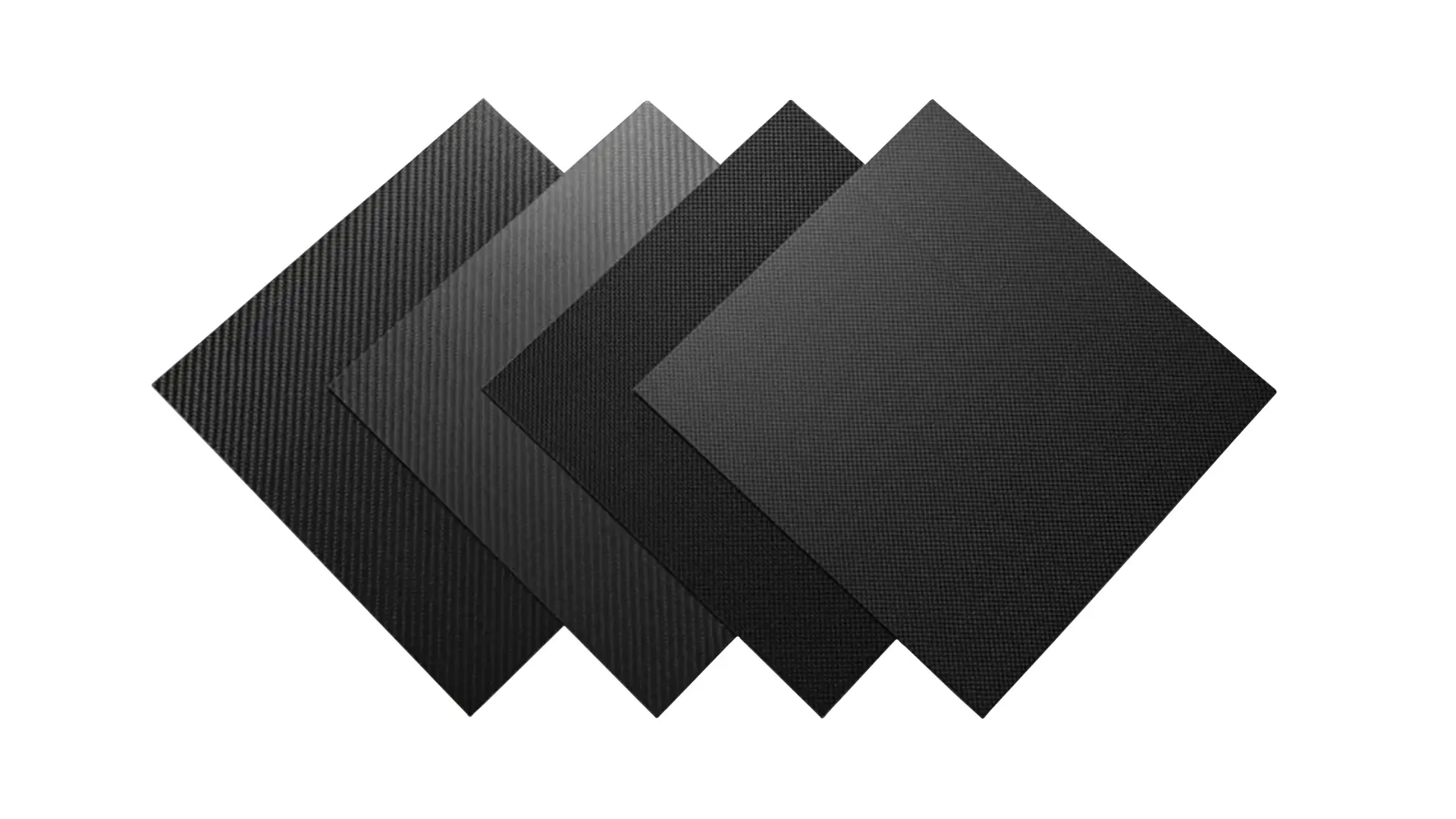
Carbon fiber tubes can be tailored to specific structural requirements because fibers can be oriented in different directions. As our notes, “depending on the required performance, a carbon fiber tube can be produced through different processes such as roll wrapping, pultrusion, compression Molding or filament winding. Each process affects the structural characteristics of the tube”[1]. Unlike metal tubes (which are isotropic), their strength varies with fiber orientation – so the manufacturing method directly influences final properties. Below we outline each process and its implications for round, square, or telescopic tubes.
Autoclave Curing

The autoclave process is a batch cure method where laid-up carbon fiber prepreg tubes are vacuum-bagged and cured under heat and high pressure. This method is typically used for applications demanding maximum quality and precision. In an autoclave cycle, a mandrel or mold holding the tube layup is sealed in a heat-resistant vacuum bag to remove air and compact the fibers[3][4]. The bagged part is then placed in a heated pressure vessel (the autoclave) where it is subjected to controlled temperature (often 120–180 °C) and pressure (e.g. 0.6–0.7 MPa) according to a precise schedule[5]. This causes the resin to flow and fully consolidate the plies into a void-free, high-fiber-content tube[5].
Autoclave curing yields exceptional mechanical properties and surface finish. Fiber volume can be maximized and voids minimized. Tight dimensional tolerances (often within ±0.2 mm) are achievable due to the uniform pressure[6]. In practice, autoclave-made carbon fiber tubes are often used for high-performance, safety-critical parts in aerospace, motorsports, and medical devices. For example, a carbon fiber telescopic tube or precision instrumentation tube cured in an autoclave will have straight, uniform walls and excellent fiber distribution.
Figure: Carbon fiber prepreg tube in an autoclave curing chamber.

Advantages and Disadvantages of Autoclave Carbon Fiber Tube Manufacturing Process
Advantages: Autoclave curing allows flexible layup schedules and custom fiber orientations (0°, 90°, ±45°, etc.) for any tube shape. This results in the highest quality tubes with maximum strength and stiffness, and very smooth cosmetic finish[7][2]. It also supports tight tolerances and custom integration of inserts or end fittings (using metal inserts in the layup) due to the precise curing environment[6].
Limitations: The main drawback is cost and throughput. Autoclaves are capital-intensive, and parts are cured one batch at a time. This process is best suited to low- or medium-volume runs or prototypes. Also, autoclave processing requires costly prepreg materials and freezer storage, increasing project cost.
Typical Tube Types: Autoclave methods excel for shorter tubes or complex shapes where quality is paramount. Round and rectangular tubes for aerospace booms, high-end sporting goods (e.g. precision ski poles or rigging), and medical tubing often use autoclave-cured layup. Telescopic tubes (nested sections) requiring precise diameter and surface finish also benefit from autoclave-grade consistency.
Roll Wrapping

Carbon fiber roll wrapping (also called mandrel wrapping) is semi-manual process where carbon fiber prepreg sheets or tapes are wrapped around a cylindrical mandrel and then cured. In this method, layers of prepreg are cut to length and spirally or circumferentially wound on a mandrel, controlling fiber angles and wall thickness by the wrap pattern[8]. After wrapping, the tube is typically vacuum-bagged and oven-cured (autoclave-cured) to solidify the structure.
Roll wrapping offers design flexibility and aesthetic finish. Wrapping “allows for variable wall thickness, controlled fiber angles, and a smooth aesthetic finish, making it ideal for structural and decorative applications”[8]. For example, a custom round carbon fiber tube can have extra ±45° plies added for torsional strength, or a bespoke camouflaged weave for a unique look. The seam where the wrap joins may be visible or overlapped, but it can be minimized with careful trimming.

Advantages and Disadvantages of roll wrapping Carbon Fiber Tube Manufacturing Process
Advantages: This process requires relatively simple tooling (just a suitable mandrel) and accommodates small batches or prototypes easily. Engineers can fine-tune the layup one layer at a time. It supports non-standard diameters and short-run customization. Fiber orientation and wall thickness can be varied along the tube. Overwraps or special release films can improve surface quality.
Typical Tube Types: Roll wrapping is often used for short to mid-length tubes in applications where customization and appearance matter. Examples include custom display frames, small structural boxes, bespoke mounts, or lower-volume square/rectangular tubing. It also works for outer layers of multi-layer tubes (for cosmetics or special external properties). Roll wrapping can be paired with an autoclave or oven cure for improved consolidation.
Pultrusion (Continuous Pulling)

Pultrusion is a continuous process ideal for straight carbon fiber profiles (tubes, beams, rods) of constant cross-section. In pultrusion, continuous carbon fiber rovings or fabrics are pulled through a resin bath (to wet the fibers) and then through a heated shaping die[9]. The resin is cured in the die, and a pulling mechanism continuously draws the solidifying profile out and cuts it to length. Because the process is “continuous manufacturing”[9], it can run 24/7 to create long, uniform tubes efficiently.
This method yields tubes with consistent dimensions and good fiber alignment along the length. Pultruded carbon fiber tubes are usually very straight and have fibers predominantly oriented parallel to the tube axis, which gives excellent axial (lengthwise) strength and stiffness. Pultrusion produces parts that are “straight, strong, and cost-efficient for industrial and construction use”[10]. For example, a pultruded carbon fiber square tube used in an architectural frame will have nearly identical wall thickness and wall straightness at meter scale.
Figure: A pultrusion line producing continuous composite profiles (a flat pultruded strip is shown). Pultrusion can also make round or rectangular tubes by using the appropriate die.

Advantages and Disadvantages of pultrusion Carbon Fiber Tube Manufacturing Process
Advantages: Pultrusion is highly automated and economical for high-volume production. Fiber placement and resin impregnation are consistent and repeatable, making quality uniform from tube to tube. The resulting tubes have high fiber volume along the length and excellent dimensional stability. It is especially effective for long, straight cylindrical or rectangular tubes (like fluted posts, structural rails, or multi-meter tubing). Little finishing is needed since the surface from the die is smooth.
Limitations: By design, pultrusion is limited to constant (unchanging) cross-sections and fixed fiber directions (mostly 0° along length). It cannot easily vary wall thickness or add angled fiber reinforcements mid-length. Complex shapes or tapered tubes are not practical. The process typically yields an isotropic profile with fewer design freedoms (e.g. no embedded inserts unless pausing production). Also, initial tooling for a pultrusion die is costly, so it’s best for long production runs.
Typical Tube Types: Pultrusion is ideal for long straight tubes with uniform cross-section. Common examples are carbon fiber drive shafts, pipes, guide rails, and square/rectangular tubing for frames. For instance, a telescopic tube system could use pultruded segments for the sliding parts, taking advantage of the precise diameter control. Any project requiring dozens or hundreds of identical tubes (such as UAV booms, conveyor rails, or industrial supports) can benefit from pultrusion’s efficiency and consistency[10][9].
Compression Molding

Carbon fiber compression molding is a high-pressure molding process where pre-cut carbon fiber prepregs or sheet molding compounds (SMC) are placed into a heated matched metal mold and consolidated under pressure to form the final part shape. In this method, the material charge is carefully arranged in the mold cavity according to the required thickness and fiber orientation, then compressed at high temperature and pressure to cure the resin and produce a dense, precision component.
During molding, the press applies several megapascals of pressure while the mold is heated (typically between 120–180 °C), ensuring uniform consolidation and minimal voids. Once cured, the mold is opened, and the part is demolded, trimmed, and optionally post-cured or coated for enhanced durability.
Compression molding offers excellent repeatability and dimensional stability. This process “delivers consistent strength, precise geometry, and high-quality surface finishes, making it ideal for medium- to high-volume carbon fiber parts.”

Advantages and Disadvantages of Compression Molding Carbon Fiber Tube Manufacturing Process
Advantages: This process provides high part uniformity, excellent surface finish on both sides, and tight dimensional control. The closed-mold setup minimizes air entrapment and ensures a high fiber volume fraction. It is suitable for repetitive production runs and allows automation for higher throughput. Molded parts can achieve superior mechanical strength and impact resistance compared to open-mold methods.
Limitations: Compression molding requires precision metal tooling, which increases upfront cost. The mold dimensions limit maximum part size, so it is less suitable for very long tubes or large structural sections. Adjusting layup or fiber angles is more constrained than in hand layup or roll wrapping. Cycle time depends on mold heating and cooling rates, affecting overall productivity.
Typical Tube Types: Compression molding is commonly used for short, high-precision carbon fiber tubes, tube connectors, and structural fittings that demand strength and consistency. It is also used for flat or contoured components such as panels, brackets, and mounting plates. In tube production, this process can form end segments or joining parts where smooth surfaces, mechanical accuracy, and durability are critical. Compression molding can also complement other processes like roll wrapping by producing mating parts or reinforcements for hybrid assemblies.
Filament Winding

Carbon fiber filament winding is the process of winding resin-impregnated fiber tows around a rotating mandrel in precise patterns. It is especially well-suited to cylindrical tubes and pressure vessels. In filament winding, continuous fibers (either wet with resin or pre-preg impregnated) are guided onto a mandrel by a programmable machine head[11]. The winding pattern (hoop, helical, polar, etc.) is determined by the tube’s load requirements; for example, hoop windings (fibers wrapped circumferentially) optimize burst pressure strength, while helical windings add axial stiffness[11].
After winding, the wet layer is cured, usually in an oven or autoclave, to harden the resin matrix[12]. The mandrel is then removed (often it is collapsible or dissolveable) to leave a seamless tube[13]. Filament winding yields tubes with high fiber content and tailored orientations, making them extremely strong relative to weight. Filament winding “delivers maximum strength control” and is preferred for “pressure vessels, aerospace tubing, and high-stress applications”[14].

Advantages and Disadvantages of filament winding Carbon Fiber Tube Manufacturing Process
Advantages: Filament winding produces very high strength-to-weight tubes with excellent fiber bond. Because fiber tension and winding angles are computer-controlled, the process achieves consistent, void-free impregnation[15]. Tube lengths can be quite long, limited mainly by mandrel handling. Complex winding patterns can be applied (including strategic angle changes). Production is semi-automated, so large-diameter cylinder production is faster than hand layup. Winding is scalable to both small and larger runs once set up.
Limitations: Filament winding mainly supports axisymmetric (cylindrical) shapes – it’s difficult to wind a perfect square or complex shape except via multi-piece methods. Winding on a rectangular mandrel is complex and rarely done. Also, inner features (like inserts or bonded layers) are harder to incorporate during winding – most inserts must be added post-cure. The interior surface is defined by the mandrel and often requires a release agent, and removing the mandrel can be a challenge if it isn’t collapsible. For these reasons, filament winding is less common for short, highly tapered, or non-cylindrical tubes.
Typical Tube Types: Filament winding shines for round pressure tubes, rocket motor casings, cylindrical structural members, and hydraulic cylinders. For example, long carbon fiber drive shafts or hydraulic pipe sections can be filament-wound for uniform, high-strength tubing. It’s also used for high-end bicycle or engine shafts. Lightweight cylindrical telescoping poles for photography or drones can be wound in segments (with inner surfaces formed by the mandrel) and then assembled. In general, any application demanding high burst pressure or torsional loads (such as fuel tanks, high-pressure pipes, or drive shafts) is suited to filament-wound tubes[14][15].
Process Comparison Table
Below is a comparison of the four production processes in terms of key aspects:
| Process | Ideal Tube Shape/Type | Production Volume | Key Strengths | Limitations |
|---|---|---|---|---|
| Autoclave Curing | Complex or short tubes (round/square) | Low to medium | Highest fiber compaction; excellent precision and surface quality | High cost; long cycle time; batch process limits throughput; expensive prepreg storage |
| Roll Wrapping | Custom or standard tubes | Medium | Automated or semi-automated winding ensures consistent layup and faster throughput; | Still limited by mandrel length and setup; |
| Pultrusion | Long straight tubes (constant cross-section) | High (continuous) | Consistent dimensions and straightness; high throughput; cost-effective at scale | Limited to fixed cross-section; fiber orientation mainly axial; less design flexibility |
| Filament Winding | Cylindrical tubes, pressure vessels | Medium (after setup) | Controlled fiber orientations (hoop/axial) for max strength; high fiber volume; scalable | Generally cylindrical only; mandrel required; interior finishing needed; insert integration complex |
| Compression Molding | Short to medium tubes | Medium to high (cycle-based) | Excellent repeatability and surface finish; fast cycle time; compatible with thermoset or thermoplastic composites; allows complex features | Requires matched metal molds; high tooling cost; limited to part size and press capacity; less fiber length continuity |
Each process is balanced between performance, cost, and flexibility. For example, roll wrapping allows custom appearances, whereas pultrusion drives down unit cost for large volumes at the expense of geometry flexibility[16][9]. Filament winding is unmatched when precise strength control in a cylinder is needed[14], while autoclave curing is unmatched in accuracy and fiber consolidation[7][2], and compression molding bridges the gap — offering higher productivity with complex geometries once molds are in place.
Tube Type vS. Recommended Process
Choosing the right process also depends on tube geometry and application:
- Round (Cylindrical) Tubes: All five processes can produce round tubes. For high-volume industry standard tubes, pultrusion or filament winding works best. For specialty lengths or finishes, roll wrapping or autoclave layup may be used. Filament winding excels for pressure or load-bearing cylinders; pultrusion excels for long straight pipes; autoclave wrap-ups give premium finish on short runs; compression molding is suitable for shorter, high-volume wholesale.
- Square/Rectangular Tubes: These are often made by either pultrusion or hand layup. Pultrusion creates uniform rectangular tubes economically in large runs[17]. For custom shapes or integrated features, manual layup (autoclave or RTM in molds) or roll-and-bond methods are used[18][19]. Rectangular tubes with embedded fittings often require split-mold molding or precise layup.
The table below summarizes the best process choices for each tube type:
| Tube Shape | Recommended Processes | Notes |
| Round / Cylindrical Tube | Filament Winding, Pultrusion, Roll Wrapping,compression Molding | Choose filament or pultrusion for strength/volume; roll for custom finishes; autoclave for small precision runs,compression molding for fast, short, complex forms. |
| Square / Rectangular Tube | Pultrusion, Autoclave/RTM, Compression Molding | Pultrusion for long straight sections[10]; autoclave for small batches with inserts[20], compression molding for short structural housings or integrated corners |
Choosing the Right Process
When advising clients, we evaluate factors like volume, geometry, required performance, and cost. Some key decision points include:
- Production Volume: For hundreds to thousands of tubes(Industrial use), pultrusion is usually the most cost-effective route. For prototyping or small batches, autoclave layup or roll wrapping gives flexibility. Filament winding has a moderate setup cost and suits medium runs of cylindrical parts. Compression molding is suitable for mass production of customized tubes.
- Structural Requirements: If the application demands maximum strength and precision (e.g. aerospace shafts or high-pressure pipes), autoclave or filament winding are ideal. They allow custom fiber angles to meet specific load cases[14]. For general stiffness and load, pultrusion provides uniform quality.
- Geometry and Complexity: Complex shapes or integrated features favor autoclave/RTM in molds (which can form ends/fittings) or compression molding for custom lengths[21][22]. Long uniform tubes without curves are perfect for pultrusion.
- Surface Finish and Tolerance: If cosmetic surface quality is important (visible weave patterns, glossy finish), autoclave or compression molding give the best finish. Filament winding produces seamless smooth cylinders. Roll wrapping can achieve a nice finish but may show seams.
- Weight and Material: All processes produce lighter parts than metal, but the exact fiber volume can vary. Autoclave ,compression molding and filament winding often achieve higher fiber percentage (lighter weight) due to pressure curing. Pultrusion has high fiber content in the lengthwise direction.
In short, we help clients choose by matching their project needs to each process’s strengths. we “evaluate the technical requirements and recommend the most efficient material combination” for each project[23].
Process Comparison Summary
The following table highlights how tubes from each process compare on key properties:
| Property | Autoclave Cured Tube | Roll-Wrapped Tube | Pultruded Tube | Filament-Wound Tube | Compression-Molded Tube |
|---|---|---|---|---|---|
| Fiber Orientation | Fully customizable layup | Customizable, layer-by-layer | Mainly 0° (axial) | Controlled helical/hoop patterns | Random or quasi-isotropic (mat/preform) |
| Wall Thickness | Variable by layup | Variable by winding layers | Constant (fixed die gap) | Constant per mandrel wrap | Controlled by mold cavity |
| Length Capability | Limited by autoclave size | Limited by mandrel size (~<10 m) | Very long (continuous) | Long, limited by mandrel | Limited by mold/press (~<2 m typical) |
| Seams/Joints | Seamless (if one wrap or mold used) | Overlap seam present | Seamless continuous | Seamless | Seamless (closed mold) |
| Dimensional Tolerance | Excellent (±0.2 mm or better)[6] | Moderate | Very good along length | Good circumferentially | Excellent repeatability (±0.1–0.3 mm typical)[24] |
| Surface Finish | Excellent (pressure consolidated) | Good if trimmed | Good (smooth die) | Good (outer smooth, inner polish needed) | Excellent (mold-polished) |
| Throughput/Cost | Low output, high cost per part | medium output, moderate cost | High output, low cost | Medium output, moderate cost | High output after tooling, low unit cost |
Using these criteria, a procurement team can weigh trade-offs. For instance, if ultimate precision is required for a batch of prototype tubes, autoclave curing is justified. If large quantity of uniform Industrial tubes is needed, pultrusion will save cost. If special fiber layup is needed (e.g. alternating fiber angles), compression Molding/filament methods win.
Conclusion
Every carbon fiber tube project is unique. By analyzing tube geometry (round vs. square), quantity, and performance requirements, we select the most suitable manufacturing line. Autoclave cure offers top quality and flexibility for low-volume, high-spec tubes[7][2]. Roll wrapping provides custom layups and small-batch convenience[8]. Pultrusion delivers unmatched efficiency and consistency for long, straight runs[10]. Filament winding produces extremely strong cylindrical tubes with precise fiber control[14][11], compression molding ideal for medium- to high-volume, short or integrated composite parts, combining surface precision, speed, and repeatability.
As an experienced carbon fiber manufacturer, Alizn uses our deep process knowledge to guide B2B customers in their decisions – helping procurement teams choose the best fabrication method for each carbon fiber tube product. With the right production process, the resulting tube will meet the required strength, fit, and quality standards at the best overall cost and lead time.
Sources: Alizn technical resources on carbon fiber tube manufacturing
[1] [8] [10] [14] [16] [23] Carbon Fiber Tube VS. Traditional Materials Tubes
[2] [3] [4] [5] [6] [7] Carbon Fiber parts Manufacturing Process Autoclave Line
[9] Carbon Fiber Products Pultrusion Molding Line
[11] [12] [13] [15] Carbon Fiber Parts Molding Process Filament Winding Production line
[17] [18] [19] [20] [21] [22] Carbon Fiber Rectangular Tube Manufacturing Guide
Final Thoughts
As composite material experts, we are willing to provide you with critical assistance. The correct judgment now avoids cost overruns, delays, and disappointing results later.
Need advice on your custom carbon fiber part? Reach out to our team for expert guidance.