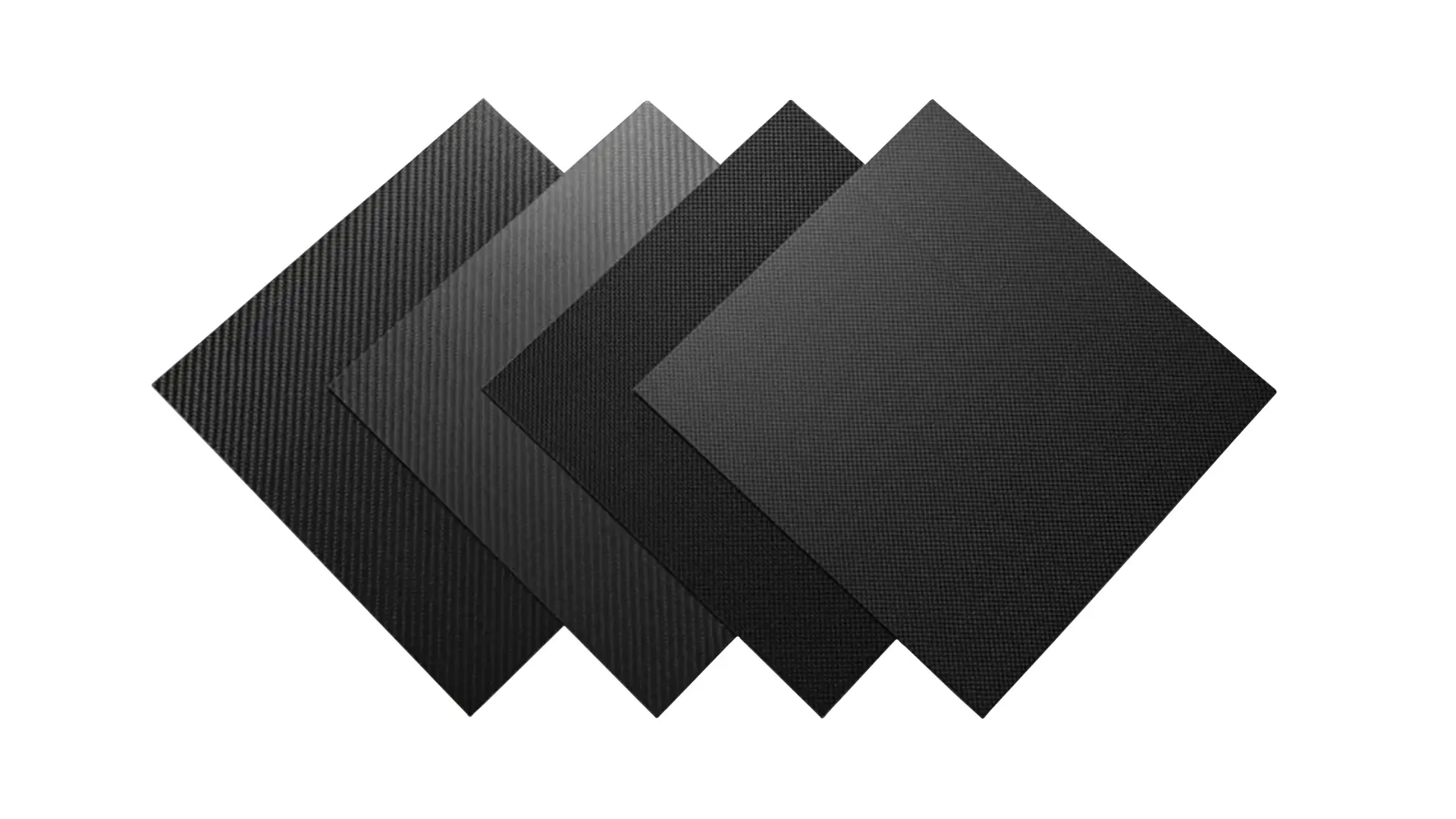
For many buyers, the first question is not just about weight reduction but about strength. A hood is more than a cosmetic feature; it protects the engine bay, adds aerodynamic stability, and contributes to overall safety. At Alizn, as a professional carbon fiber parts manufacturer, we often guide customers through the technical factors that affect the strength of a 370z carbon fiber hood.
This article provides a complete technical and practical guide, examining different production lines, material options, and customization choices that influence strength. By the end, you will understand how to select the right hood for your Nissan 370z and why Alizn can provide the strongest and most cost-effective solutions.
Why Strength Matters in a 370z Carbon Fiber Hood
The hood of a Nissan 370z faces unique requirements. Unlike smaller panels, it is a large, relatively flat component exposed to aerodynamic forces, vibrations, and temperature variations. A weak hood may flex excessively, create safety risks, or wear out prematurely.
Strength in a carbon fiber hood can be defined in terms of several engineering metrics:
- Tensile strength (MPa): resistance to being pulled apart
- Flexural strength (MPa): ability to withstand bending forces
- Impact resistance (kJ/m²): ability to absorb sudden loads without cracking
- Fatigue resistance: long-term durability against repeated stresses
Compared with aluminum or steel OEM hoods, carbon fiber typically delivers superior strength-to-weight ratios. A steel OEM hood may weigh 45–50 lbs and offer tensile strengths around 250–300 MPa. An aluminum OEM hood may weigh 30–35 lbs with tensile strengths around 150–250 MPa. By contrast, a properly manufactured 370z carbon fiber hood weighs 18–22 lbs while delivering tensile strengths of 600–900 MPa, depending on process and customization.
Typical 370z Carbon Fiber Hood Strength with Standard Manufacturing
In the aftermarket, most 370z carbon fiber hoods are produced using a 3K 2×2 twill weave carbon fiber fabric combined with resin under vacuum infusion or autoclave curing. The following table provides approximate comparisons of standard hood strength versus OEM options.
Approximate Comparison of Hood Material Strength
| Hood Type | Weight (lbs) | Tensile Strength (MPa) | Flexural Strength (MPa) | Impact Resistance (kJ/m²) | Relative Cost |
|---|---|---|---|---|---|
| OEM Steel Hood | 45–50 | 250–300 | 350–400 | Medium | * |
| OEM Aluminum Hood | 30–35 | 150–250 | 250–300 | Low-Medium | * |
| Standard 370z Carbon Fiber Hood (Vacuum) | 20–22 | 650–750 | 750–900 | High | ** |
| High-End 370z Carbon Fiber Hood (Autoclave Prepreg) | 18–20 | 800–900 | 900–1100 | Very High | *** |
This shows that even entry-level vacuum infusion carbon fiber hoods outperform OEM options in strength while weighing significantly less. Advanced autoclave prepreg production lines achieve maximum performance, which appeals to track-focused customers.

Influence of Production Lines on 370z Carbon Fiber Hood Strength
The production method is the single most important factor in determining the strength of a 370z carbon fiber hood. Even when using the same raw carbon fiber fabric and resin, the choice of production line dramatically changes the fiber-to-resin ratio, the number of voids in the composite, and ultimately the durability of the finished part. At Alizn, we operate multiple production lines and help customers choose the right one based on their performance needs, whether they are focused on street reliability, track performance, or cost efficiency.
1. Hand Layup Production
Hand layup is the earliest and simplest method for building a 370z carbon fiber hood. In this process, technicians manually place carbon fiber layers into a mold and apply resin by brush or roller.
- Advantages:
- Lower production cost
- Flexible for small batch or custom designs
- Faster setup with minimal equipment investment
- Disadvantages:
- Resin distribution is inconsistent
- Air pockets and voids are more likely
- Lower bonding strength between fiber and resin
- Weaker mechanical properties compared to advanced processes
- Performance Data:
- Typical tensile strength: 400–500 MPa
- Flexural strength: 500–600 MPa
- Suitable for aesthetic upgrades or lightweight street use, but not for heavy track abuse
2. Vacuum Infusion
Vacuum infusion improves significantly on hand layup by using a sealed mold with vacuum pressure to pull resin uniformly through the carbon layers. This ensures better compaction and more accurate fiber-to-resin ratios.
- Advantages:
- More consistent mechanical properties
- Reduced void content compared to hand layup
- Achieves a cleaner surface finish
- Balanced weight-to-strength ratio
- Disadvantages:
- More complex setup compared to hand layup
- Cycle time is longer due to vacuum process
- Performance Data:
- Tensile strength: 650–750 MPa
- Flexural strength: 750–900 MPa
- Suitable for most street-performance and mild track applications
3. Autoclave Prepreg
Autoclave curing with prepreg (pre-impregnated carbon fiber sheets) is considered the gold standard in composite manufacturing. The material comes pre-coated with an optimal resin system, and the curing process applies both heat and high pressure.
- Advantages:
- Aerospace-grade mechanical properties
- Highest strength-to-weight ratio achievable
- Very low void content (<1%)
- Excellent surface finish and long-term durability
- Disadvantages:
- Higher cost due to energy-intensive curing and expensive prepreg materials
- Requires specialized autoclave equipment
- Performance Data:
- Tensile strength: 800–900 MPa
- Flexural strength: 900–1100 MPa
- Suitable for racing applications, extreme enthusiasts, and high-demand environments where safety and rigidity are top priorities
4. Compression Molding
Compression molding involves placing carbon fiber sheet molding compounds (SMC) into a heated mold, where high pressure shapes and cures the material. This process is often used in automotive OEM production because of its efficiency.
- Advantages:
- Fast production cycle
- High repeatability and consistency
- Lower labor cost per part
- Better suited for large-scale production runs
- Disadvantages:
- Less customizable than prepreg or vacuum infusion
- Slightly lower strength compared with autoclave-cured prepreg parts
- More upfront investment in tooling and presses
- Performance Data:
- Tensile strength: 600–700 MPa
- Flexural strength: 700–800 MPa
- Often used when balancing performance with production speed for OEM-level parts
Comparative Overview
To help customers easily compare these production lines, the following table summarizes the key data for 370z carbon fiber hood manufacturing.
| Production Method | Tensile Strength (MPa) | Flexural Strength (MPa) | Void Content | Cost Level | Best For |
|---|---|---|---|---|---|
| Hand Layup | 400–500 | 500–600 | High | * | Budget builds, visual upgrades |
| Vacuum Infusion | 650–750 | 750–900 | Medium | ** | Street performance, balanced builds |
| Autoclave Prepreg | 800–900 | 900–1100 | Very Low | *** | Racing, aerospace-level strength |
| Compression Molding | 600–700 | 700–800 | Low-Medium | ** | Large-scale OEM-type production |

Customization Options and Their Effect on Strength
Beyond the choice of production line, customization decisions play a crucial role in determining the strength of a 370z carbon fiber hood. Customers often underestimate how variables such as ply thickness, resin system, weave pattern, or even fiber orientation influence both strength and durability. At Alizn, we always analyze the intended application—whether for street driving, track performance, or aesthetic upgrade—to recommend the right balance of customization.
Ply Thickness and Layer Count
Each additional ply of carbon fiber fabric contributes to increased strength and stiffness, but it also adds weight. Finding the correct layer count is a balance between rigidity and lightweight performance.
Effect of Ply Thickness on Hood Strength
| Ply Count (3K Twill Layers) | Hood Weight (lbs) | Tensile Strength (MPa) | Flexural Strength (MPa) | Notes |
|---|---|---|---|---|
| 3 layers | 16–17 | 500–550 | 600–650 | Very light, may flex under stress |
| 4 layers | 18–19 | 650–700 | 750–800 | Balanced street application |
| 5 layers | 20–21 | 750–800 | 850–950 | Stronger, suitable for performance use |
| 6 layers | 22–23 | 850–900 | 950–1050 | Maximum rigidity, slight weight increase |
| 7 layers | 24–25 | 900–950 | 1000–1100 | Track-focused stiffness, heavier handling |
Adding layers improves structural strength but can reduce hood responsiveness due to weight gain. For most 370z carbon fiber hood projects, 4–5 plies deliver the best balance between rigidity and lightweight performance.
Resin Ratio
The resin system is as important as the fibers themselves. Resin content determines bonding, impact resistance, and long-term durability. Epoxy systems are typically superior to polyester or vinyl ester for high-performance applications.
Effect of Resin Content on Strength
| Resin Content (% by weight) | Hood Weight (lbs) | Tensile Strength (MPa) | Flexural Strength (MPa) | Impact Resistance |
|---|---|---|---|---|
| 35% | 18 | 750–800 | 850–900 | High |
| 38% | 19 | 800–850 | 900–1000 | Very High |
| 42% | 20 | 820–880 | 950–1050 | Optimal |
| 45% | 21 | 780–830 | 850–950 | Medium |
| 50% | 22 | 700–750 | 800–850 | Lower, more brittle |
Too little resin results in voids and poor bonding, while too much increases brittleness and weight. The optimal ratio for a 370z carbon fiber hood is around 38–42%, which offers the best combination of strength, impact resistance, and manageable weight.

Weave Patterns
Weave structure not only influences appearance but also affects how forces are distributed across the hood surface.
Weave Pattern and Hood Performance
| Weave Type | Strength | Weight | Cost | Appearance |
|---|---|---|---|---|
| Plain Weave | Medium | Light | * | Subtle, classic |
| 2×2 Twill Weave | High | Light | ** | Sporty, flowing pattern |
| Harness Satin | Very High | Medium | *** | Premium, unique finish |
| Spread Tow | High | Very Light | *** | Technical, racing look |
| Hybrid Weave (CF + Kevlar) | Very High | Medium | *** | Enhanced impact resistance, colored finish |
For most 370z carbon fiber hoods, the 2×2 twill weave is the preferred choice, balancing aesthetics with mechanical strength. However, spread tow and hybrid fabrics are increasingly popular in high-performance builds.
Fiber Orientation
Beyond the weave, the orientation of carbon fiber layers strongly impacts directional strength.
- 0°/90° orientation: maximizes longitudinal stiffness, reduces flex.
- ±45° orientation: improves torsional strength and impact resistance.
- Quasi-isotropic layups (0°/90°/±45°): provide uniform strength in multiple directions.
Fiber Orientation and Strength Behavior
| Layup Orientation | Tensile Strength (MPa) | Flexural Strength (MPa) | Torsional Stiffness | Best Use |
|---|---|---|---|---|
| 0°/90° only | 800–850 | 850–900 | Medium | Straight-line rigidity |
| ±45° only | 700–750 | 800–850 | High | Drift or corner-heavy driving |
| Quasi-isotropic | 820–880 | 900–1000 | Very High | All-around performance |
Most customers choose a quasi-isotropic layup for their 370z carbon fiber hood to achieve balanced performance.
Carbon Fiber Grade
Not all carbon fiber is equal. The grade of the fiber itself alters stiffness and tensile properties.
- Standard Modulus (SM): Tensile modulus ~230 GPa, suitable for general automotive parts.
- Intermediate Modulus (IM): Higher stiffness, often used in aerospace-grade projects.
- High Modulus (HM): Maximum rigidity but more brittle, suitable for racing parts only.
Carbon Fiber Grade and Hood Strength
| Fiber Grade | Tensile Strength (MPa) | Flexural Strength (MPa) | Brittleness | Cost | Use Case |
|---|---|---|---|---|---|
| Standard | 750–850 | 850–950 | Low | * | Street builds |
| Intermediate | 850–950 | 950–1050 | Medium | ** | Performance builds |
| High Modulus | 950–1100 | 1000–1200 | High | *** | Racing, lightweight optimization |
Hybrid Reinforcement Options
Some customers request hybrid reinforcements to improve impact resistance or aesthetics:
- Carbon + Kevlar: Improves puncture and impact resistance, often with colored weave patterns.
- Carbon + Fiberglass: Reduces cost while maintaining moderate strength.
- Carbon + Basalt Fiber: Enhances thermal resistance for track cars.
By carefully selecting ply thickness, resin ratio, weave structure, fiber orientation, and carbon grade, the final strength of a 370z carbon fiber hood can vary widely. At Alizn, we don’t use a one-size-fits-all approach. Instead, we guide customers to the exact configuration that matches their driving needs and budget, ensuring both safety and performance.

Balancing Weight and Strength
Customers often ask whether they should prioritize the lightest hood possible or the strongest hood possible. The answer depends on usage.
- Daily drivers: A 4-layer vacuum infusion hood offers the best balance of weight and durability.
- Track users: A 5–6 layer autoclave prepreg hood ensures maximum rigidity under aerodynamic loads.
- Show cars: A lighter hand-layup hood with 3 layers may be acceptable, especially for aesthetic upgrades.
At Alizn, we typically recommend a 4–5 layer hood with optimized resin ratios, produced under autoclave conditions for customers who want both strength and durability.
Safety and Long-Term Durability
A hood must withstand more than just static loads. Temperature fluctuations, vibration, and long-term fatigue are equally important. Tests show that autoclave-prepared hoods maintain over 90% of their initial tensile strength after 10,000 stress cycles, while hand-layup hoods may drop below 70%.
This is why choosing the right production line and customization is critical. Customers seeking a strong and long-lasting 370z carbon fiber hood should not only consider initial weight savings but also how the hood will perform after years of use.
Why Alizn Provides Cost-Effective Strong 370z Carbon Fiber Hoods
Many customers wonder why Alizn can provide strong custom carbon fiber hoods at lower costs compared to other suppliers. The reasons are clear:
- Labor-Intensive Advantage: Carbon fiber production involves significant manual work. Located in a region with efficient labor structures, Alizn can deliver complex hoods at lower costs.
- Raw Material Access: In China, raw carbon fiber fabric and epoxy resins are sourced at lower prices than in Western markets. This translates into *** cost savings for customers.
- Technical Expertise: Our advanced autoclave and vacuum infusion production lines ensure superior strength-to-weight ratios. Years of technical experience allow us to optimize layups and resin ratios.
- Flexible Customization: Unlike many manufacturers, we provide customers with the ability to choose ply count, weave type, resin system, and finish—ensuring the perfect balance of weight and strength for each application.
Conclusion
The strength of a 370z carbon fiber hood depends on production method, ply thickness, resin content, and weave pattern. By analyzing engineering data and matching it with real-world usage, customers can make informed decisions about which hood best suits their needs.
At Alizn, our role as a carbon fiber parts manufacturer is not only to produce components but also to guide customers with professional expertise. Whether you need a lightweight hood for aesthetics or a high-strength autoclave prepreg hood for racing, we can deliver customized solutions with superior durability and cost efficiency.
Final Thoughts
As composite material experts, we are willing to provide you with critical assistance. The correct judgment now avoids cost overruns, delays, and disappointing results later.
Need advice on your custom carbon fiber part? Reach out to our team for expert guidance.